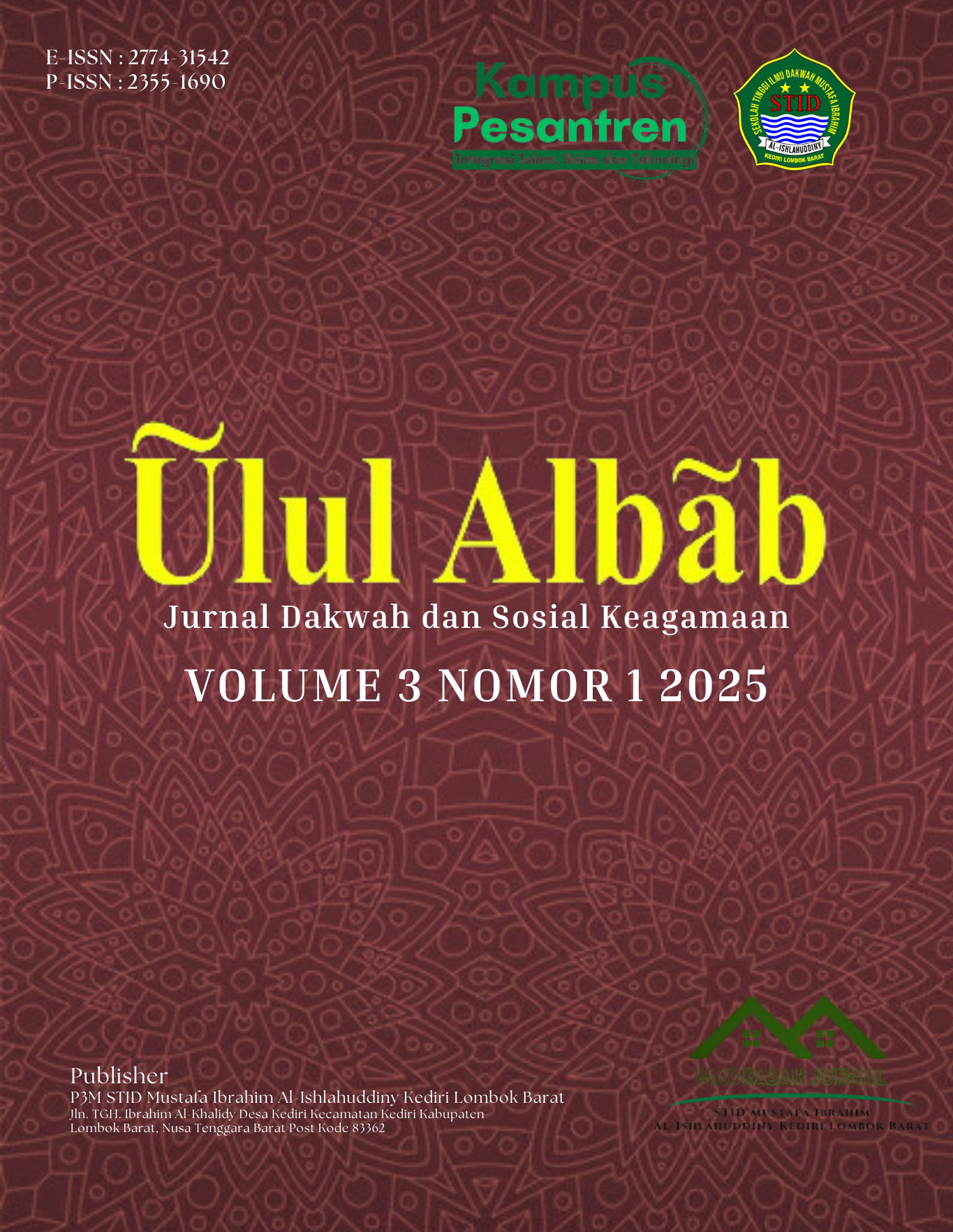
Strategi Interaksi Sosial Mahasantriwati Bercadar di Lingkungan Pesantren: Studi Pada Ma`had Takhassus Al-Ishlahuddiny
DOI:
https://doi.org/10.69943/zmp3pq94Keywords:
Social Interaction Strategies, Veiled Female Students, Islamic Boarding SchoolAbstract
The phenomenon of female students (mahasantriwati) wearing the niqab (face veil) in Islamic boarding schools (pesantren) is a significant subject of study due to its close connection to communication dynamics and social interaction within religious educational settings. The practice of wearing the niqab often elicits diverse perceptions—ranging from acceptance to negative stereotypes—that can impact social harmony. While previous studies have examined the communication of niqab-wearing women in the general public, there remains a research gap regarding the specific social interaction strategies employed by niqab-wearing female students within the pesantren context—particularly in institutions with intensive guidance programs, such as Ma’had Takhassus Al-Ishlahuddiny in Kediri, West Lombok. This study focuses on the question: What social interaction strategies do niqab-wearing female students at Ma’had Takhassus Al-Ishlahuddiny employ? It utilizes a qualitative method with a case study approach conducted at the institution, gathering data through in-depth interviews, participant observation, and documentation. Data analysis was carried out in three main stages: data reduction, data presentation, and conclusion drawing. The findings reveal social interaction strategies that include empathy-based interpersonal communication, the use of adaptive body language, and the utilization of social media to foster public understanding. The study’s novelty lies in highlighting the active role of niqab-wearing female students as agents of inclusive communication capable of overcoming social prejudices within the pesantren environment. Recommendations include the development of Islamic communication guidance programs grounded in social skills, as well as further research exploring the perspectives of the external community regarding the presence of niqab-wearing female students in these institutions.
Downloads
Published
Issue
Section
License
Copyright (c) 2025 Ulul Albab: Jurnal Dakwah dan Sosial Keagamaan

This work is licensed under a Creative Commons Attribution-NonCommercial 4.0 International License.